Advanced Defense Technologies: Powering Modern Defense Operations
Modern times have witnessed the critical role of advanced technology in shaping modern security operations
Advanced Defense Technologies: Powering Modern Defense Operations
Modern times have witnessed the critical role of advanced technology in shaping modern security operations
Every aspect of land, air, sea, cyber, and space-based defense depends on highly specialized systems, where electronics, artificial intelligence, and communication technologies play a vital role in mission success.
This article will discuss how advanced semiconductors, high-speed networking, ruggedized electronics, and AI algorithms have transformed security strategies and mission effectiveness.
Military surveillance systems consist of a combination of regular visible-light cameras, thermal imagers, and infrared sensors. The aim is to achieve an integrated zero-blind spot approach that includes automatic real-time intelligence gathering for threat detection, examining risk assessment, and enhancing situational awareness with unmatched precision and efficiency 24/7 in any condition. Defense cameras provide military agencies with real-time intelligence for border security, threat detection, and tactical response, from daylight reconnaissance and night vision operations to thermal detection through smoke and fog. Here are the different types-
Encryption and anti-jamming technologies protect data from being intercepted and subsequent manipulation. They are a part of tactical communications. When combined with low-latency, high-reliability networks, tactical communications enable seamless coordination in field operations and across command units. The communications architecture must be sufficiently scalable and robust for enhanced operational efficiency, high-speed data exchange, and even strategic decision-making in critical missions. The types of communication systems in defense include:
Video 1: Analog Devices: 5G Leadership - Testing, Building, & Harnessing 5G
Cyber threats can destabilize national security, critical infrastructure, and defense operations depends on cyber systems for communication, intelligence, and even logistics. Advanced cyber defense technologies thus ensure network resilience, secure communications, and real-time threat mitigation. The following are the most critical cyber defense technologies shaping military and defense cybersecurity.
Autonomous defense systems reduce human exposure to threats, including unmanned drones, ground robots, and maritime platform systems. They integrate advanced robotics to execute high-risk, complex missions. They have enhanced situational awareness, accelerated response times, and enabled remote operations.
AI-Driven Aerial Reconnaissance: UAVs with multi-spectral imaging, LiDAR, and real-time AI analytics conduct autonomous surveillance, terrain mapping, and target tracking. For example, electric vertical take-off and landing vehicles (eVTOLs) offer efficient, runway-free operation with tilting engines for enhanced flight. They feature more straightforward controls and the potential for full autonomy. Optimized for urban airspace, eVTOLs reduce congestion and travel times by transporting passengers and cargo above traffic.
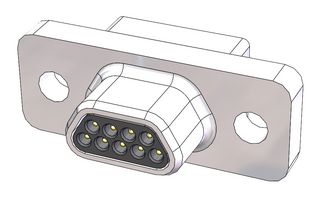
Connectors and cables are critical to eVTOL design, ensuring efficiency, reliability, and safety across power, communication, and sensor systems. Circular connectors enable high-power delivery from batteries to motors, handling high voltages and currents while maintaining insulation and durability in extreme conditions. D-shaped connectors support sensor-driven navigation and flight control, offering secure, shock-resistant connections for real-time data transmission. RF & Microwave connectors facilitate low-latency, high-speed data transfer for 5G communication and autonomous flight, ensuring signal integrity in demanding environments. Compression connectors enhance quick-charging reliability, withstanding extreme voltages, currents, and environmental stresses to enable safe and efficient battery charging.
Automated Border Surveillance: Sensor-integrated robotic patrol units utilize autonomous navigation, infrared detection, and pattern recognition to monitor perimeters and detect unauthorized movement.
Unmanned Aerial and Maritime Operations: Military Unmanned Aerial Vehicle (UAV) drones must be compact, lightweight, and feature-rich while enduring extreme temperatures (-55°C to +200°C), harsh weather, shock, and vibration. Designed for high-altitude operations and frequent handling, they require rugged, high-performance electronics to ensure reliability and mission success in challenging environments.
UAV connectors must be lightweight, compact, and highly reliable to support advanced features like GPS, cameras, sensors, and secure wireless communication while ensuring resistance to electronic interference. MIL-DTL-83513-compliant microminiature D-Type connectors are standard in military drones, while emerging nano-miniature connectors aim to further reduce weight and size without compromising performance, offering low contact resistance, high current capacity, and strong dielectric strength.
AI-powered submersibles leverage acoustic signal processing and sonar imaging to track underwater threats, scan seabeds, and monitor naval zones.
Threat Detection & Response: Autonomous platforms utilize edge computing, computer vision, and sensor fusion to identify anomalies, predict threats, and relay actionable intelligence.
AI-powered navigation uses reinforcement learning and computer vision for autonomous pathfinding in GPS-denied environments. MEMS-based sensors, including accelerometers, gyroscopes, and magnetometers, enable real-time stability, positioning, and terrain adaptation. High-speed 5G and encrypted data links ensure secure, low-latency command, control, and intelligence transmission across unmanned aerial, ground, and underwater systems.
Multi-domain operations (MDO) integrate land, sea, air and space capabilities to achieve strategic and operational goals. Defense electronics must withstand extreme conditions, including high desert temperatures, freezing polar climates, and humid rainforest environments, ensuring reliable performance across all domains.
Video 2: Know more about Aerospace and Defense Capabilities
Every aspect of modern defense operations relies on cutting-edge electronics. Innovations such as AI-driven surveillance and cybersecurity to autonomous systems and space-based intelligence ensure resilience in extreme conditions, whether in deep-sea deployments, space missions, or arctic operations. The future of security depends on the continued integration of advanced electronics and AI-driven automation, making global defense smarter, faster, and more reliable than ever. Farnell provides a comprehensive selection of defense-grade components that meet military and aerospace standards, ensuring rapid global delivery for critical projects.
L’une des plus grandes révolutions de l’histoire de l’humanité ! L’IA est un concept global qui intègre l’intelligence humaine dans les machines.
The #1 Destination for Embedded Evaluation Boards, Development Kits, and Tools
Explore our well-curated library of whitepapers, technical articles, videos, training modules, tutorials, and more to support you in developing your designs, business, and career